
How to Choose Steel Plate for Your Next Project
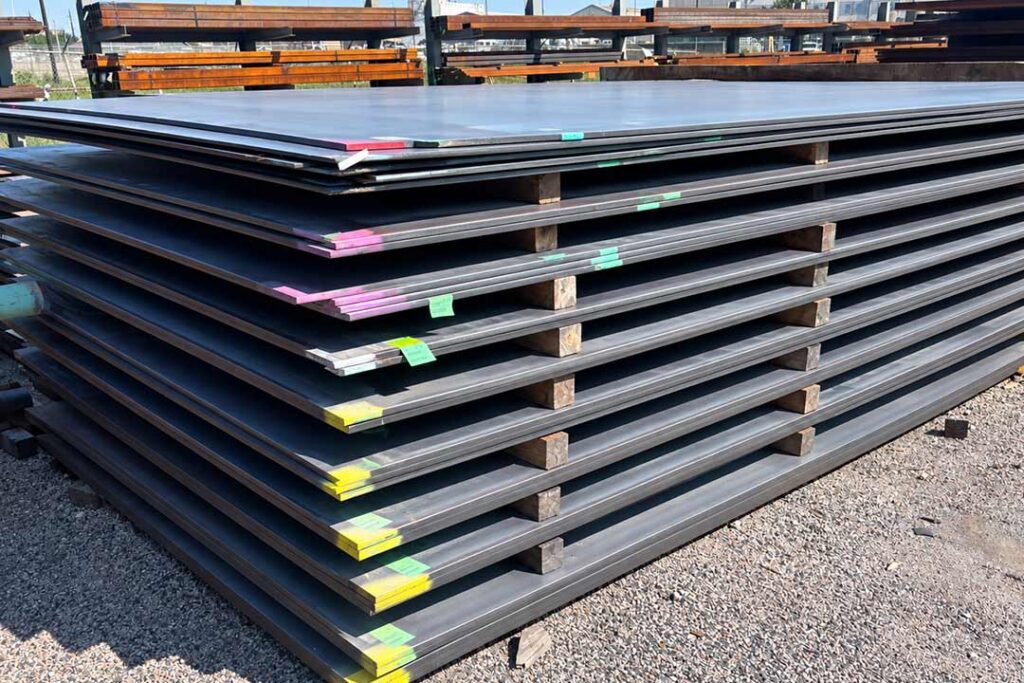
From construction and equipment manufacturing to repairs and custom fabrication, steel plate serves a wide range of applications. Each comes with its own demands, making proper material selection an important part of project planning. Understanding how to choose steel plate means considering grade, thickness, intended use and fabrication requirements, in addition to dimensions.
Making an informed choice can help you narrow your options and avoid unnecessary costs. With extensive knowledge and an expansive inventory of prime and Less-Than-Prime© (LTP) steel plate, the Texas Iron & Metal team can help you evaluate what’s available and find the right fit for the job.
Steel Plate Uses: Understanding Your Options
Steel plate is a flat-rolled product that’s generally thicker than sheet metal. Common varieties include smooth plate, which has a flat surface suited for fabrication and structural components, and floor plate, which features a raised pattern for traction on walkways, platforms and other surfaces. Steel plate uses span a variety of industries and applications.
- Construction: Used for base plates, structural connections and reinforcement components, helping transfer loads and connect structural elements
- Manufacturing: Provides a durable foundation for machine bases, equipment components and fabricated assemblies
- Transportation: Used in truck beds, trailers and heavy equipment components where strength, durability and resistance to demanding operating conditions are important
- Industrial Flooring: Provides additional traction for walkways, platforms and work surfaces in industrial environments
- General Fabrication: Can be cut, welded and shaped into worktables, brackets, supports and other custom components to meet project needs
How Does Steel Plate Thickness Affect Performance?
Greater steel plate thickness generally provides more resistance to bending, making it useful for demanding applications. Thinner plate can reduce weight, material costs and fabrication demands when additional thickness isn’t necessary.
Ideal thickness will vary based on factors such as the weight a plate must support, load distribution, distance between supports and installation methods. A plate spanning a large opening, for example, may have different requirements than one supported across its entire surface.
Before purchasing, confirm the required thickness, length and width for your project. Account for finished dimensions, cutting allowances and any weight restrictions affecting transportation, handling or installation. For structural or load-bearing applications, follow project specifications or appropriate engineering guidance rather than estimating thickness based on appearance.
Not sure what’s available? Texas Iron & Metal’s knowledgeable team can help you compare plate thicknesses and dimensions in our inventory based on your project’s specifications.
Steel Plate Grades: Why Specifications Matter
Two steel plates can have identical dimensions but very different performance characteristics. Understanding steel plate grades is important when evaluating material strength, ductility and suitability for different fabrication methods.
ASTM A36 is widely used in construction and general fabrication, while ASTM A572 Grade 50 offers higher strength for more demanding structural applications. Other projects may call for specialized material, such as abrasion-resistant plate for equipment exposed to significant wear. Knowing what’s available and how varieties differ can help buyers identify suitable material without paying for properties their projects don’t require. Consider the following when evaluating grades.
- Strength: Can the material withstand the anticipated loads and stresses?
- Weldability: Is the grade appropriate for the planned welding procedures?
- Formability: Will the plate need to be bent or shaped?
- Wear Resistance: Will it face repeated abrasion or heavy contact?
- Documentation: Are mill test reports (MTRs), certifications or traceability required?
Steel Plate Durability and Fabrication Considerations
Environmental conditions and fabrication requirements can significantly impact the performance and service life of your material. Factors such as moisture, chemical exposure, cutting methods and welding processes should all be considered when evaluating steel plate durability and selecting the appropriate grade for a specific application.
- Environmental Conditions: Carbon steel can corrode when exposed to moisture and oxygen, so outdoor applications may require painting, galvanizing or other protective treatments. More demanding environments, including those involving extreme temperatures or abrasion, may call for particular steel grades or additional protection.
- Fabrication Needs: Steel plate may require cutting, shearing, punching or welding before installation or assembly. The appropriate fabrication methods depend on material thickness, grade, dimensions and required tolerances. Considering these requirements can help minimize material waste, particularly when fabricating multiple components from a single plate.
- Finishing Requirements: Cutting, drilling and welding can expose untreated surfaces or affect existing coatings. Accounting for any necessary finishing or protective treatments can help maintain long-term performance.
Texas Iron & Metal offers in-house processing services, including cutting, plate shearing and punching. Discussing your required dimensions and fabrication specifications before ordering can help identify the right services for your project.
Prime vs. LTP Options When Purchasing Steel Plate
When purchasing steel plate, LTP material can offer advantages in cost, availability and lead time, particularly when suitable inventory is already in stock. Prime steel, which is manufactured to established specifications and typically sold with consistent grades, dimensions and documentation, is a reliable choice for projects with strict requirements.
LTP spans a wide range of offerings, including excess inventory, nonstandard sizes, miscuts and material with surface imperfections such as rust. In some cases, it’s unused steel that became surplus simply because it was no longer needed for its original purpose. As a result, it’s important to evaluate individual pieces rather than assume all surplus material is alike. The following factors can help when comparing prime and surplus steel plate.
- Specifications: Does the project require a particular grade or documentation?
- Condition: Are surface imperfections acceptable?
- Dimensions: Can available material accommodate the required finished pieces?
- Processing: Will additional cutting or preparation affect overall savings?
- Availability: Is the necessary quantity currently in stock?
Because LTP inventory changes regularly, it’s worth checking with Texas Iron & Metal about current availability, even if you don’t immediately see the size or specification you need.
Finding the Right Steel Plate Supplier in Houston
Once you’ve established your project’s material requirements, the next step is finding a steel plate supplier with suitable inventory and processing capabilities. Knowing which specifications are essential and where alternatives may be acceptable can help make that process more efficient.
Before reaching out, gather your project’s key details, including intended use, required grade, thickness, dimensions, quantity and any processing needs. This can help suppliers identify available material and determine whether LTP, prime or a combination of both may be appropriate.
Texas Iron & Metal carries both prime and LTP plate, with new inventory arriving all the time. Whether you need a specific grade and dimension or have flexibility in your material selection, our team can help you review what’s available and discuss options based on your project’s requirements.
You want it, we’ve got it. That’s supply on demand.